


There's nothing wrong with following a trend. Getting in early on one is how plenty of us have made real money. New industries invent new words, new companies need names, and for a while the demand runs ahead of the supply of anything decent.
The trick is telling the difference between getting in early and getting carried away.
I've watched this cycle enough times to recognize the shape of it. In 2021, crypto and blockchain money was sloshing everywhere and a lot of it landed in domains. NameBio's numbers tell the story better than I can: publicly reported .xyz sales went from about $108,000 in 2020 to roughly $2 million in 2021. Swetha Yenugula built a portfolio of close to 20,000 .xyz names and started posting sales like quest.xyz at $70,000 and flip.xyz at $28,000. Those weren't lottery tickets. She had a thesis, she had inventory, and the buyers actually showed up.
Then came NFTs and the metaverse, and that's where it got silly.
Facebook announced on October 28, 2021 that it was renaming itself Meta. Investors had been buying meta names for weeks before that on nothing but rumor, and some of them did fine. Meta.so reportedly sold for $149,000, MetaXR.com for $60,000, MetaDating.net for $35,000 at Sedo about two weeks after somebody hand registered it.
After the announcement it stopped being a thesis and turned into a stampede. One law firm tracking the fallout identified more than 48,000 new domains containing "meta" in the days right after the news, with over a thousand a day landing at the peak.
Here's the part I like. The company itself never bought a single one of those names. It paid $60 million to Meta Financial Group for the trademark, the Meta name and the domains that came with it. Everybody who spent that first week hammering the register button was bidding on a customer who'd already gone somewhere else.
I'm not writing this from some perch of discipline, by the way. I picked up a handful of meta names that week too. I talked myself into two of them being decent. I dropped almost all of them the following year and I don't believe I sold one.
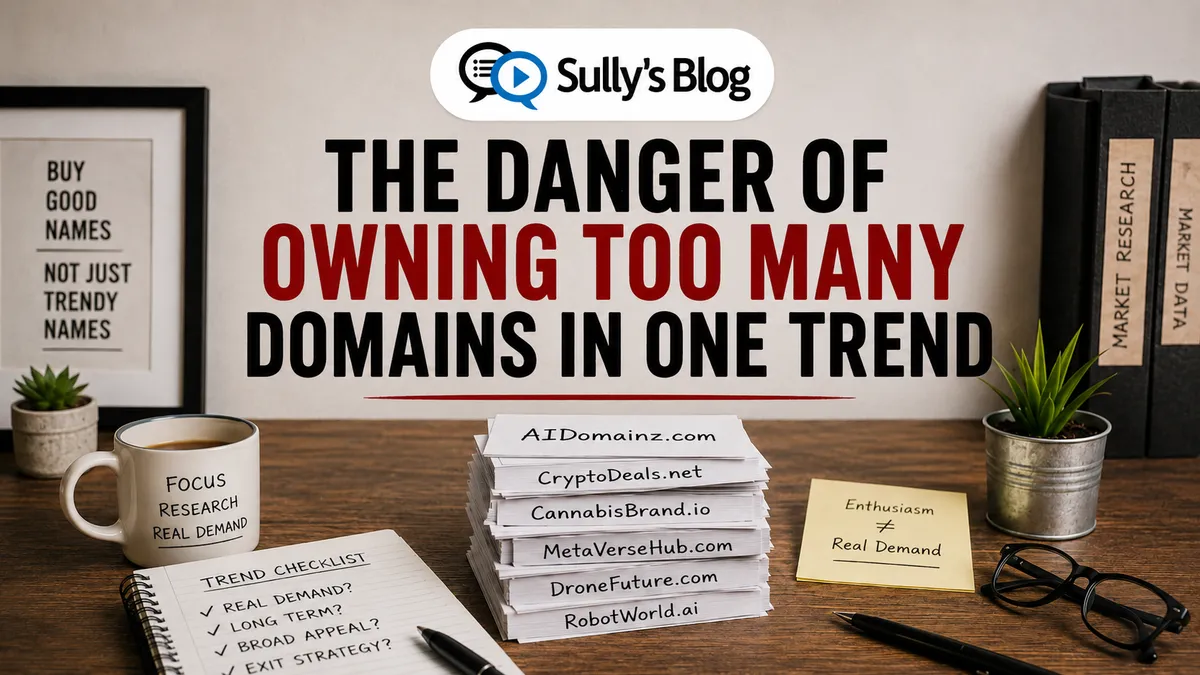
That's the part that's easy to forget while a trend is hot. The danger isn't buying five or ten good names in an emerging industry. The danger is letting enthusiasm for the industry convince you that a hundred marginal names just became investment quality.
AI is the obvious current example, and I want to be careful here, because AI isn't a fake trend. Companies are being built on it, money is pouring into it, and the sales are real. The .ai extension crossed a million registrations in January. Bot.ai cleared $1.2 million at Sedo earlier this year. AI.com sold for $70 million, which is the largest publicly disclosed domain sale anyone has ever recorded.
But look one tier down and the picture changes. One analysis of thousands of reported .ai sales this year found that volume under $5,000 contracted roughly 27 percent year over year, while premium sales stayed strong. The top of the market is fine. The bottom, where most of us actually live, has thinned out.
That's what a trend looks like from the inside. Not a collapse. Just a quiet stall in the exact part of the market where you bought.
The same story applies to robotics, drones, cannabis, and whatever's next. When a category catches fire, investors start working backward. Instead of asking whether something is a good domain, they start asking how to find a domain connected to the trend. Those are two completely different questions and only one of them has ever made me money.
You start with a legitimate category like robotics. The obvious names are gone or priced out, so you slide down the quality ladder. Words in front of robotics, words after it, city names, invented brandables, combinations you wouldn't have looked at twice eighteen months ago.
Before long you own 150 robotics domains and the number of buyers hasn't grown anywhere near as fast as the number of registrations.
So I try to treat a trend as a slice of the portfolio instead of a reason to rebuild the portfolio. When I do buy into one, I want names that still make sense if the excitement cools off. A strong keyword and a buyer I can actually picture, not a name that only works if the hype holds.
Knowing when to stop is harder than knowing when to start. If I already own 50 names tied to one industry, number 51 should have to clear a higher bar than number one did. Somewhere in there I stopped diversifying into an opportunity and started concentrating my risk, and I usually don't notice the exact moment it happened.
The renewal invoice notices. A trend can cool off in six months. A portfolio will keep billing you for ten years.
There'll be another hot category after AI and robotics. There always is, and honestly, chasing those shifts is part of why this business stays interesting. When the next one shows up I'll buy a few names, same as always. The part I'm still working on is knowing which one was the last good one.