



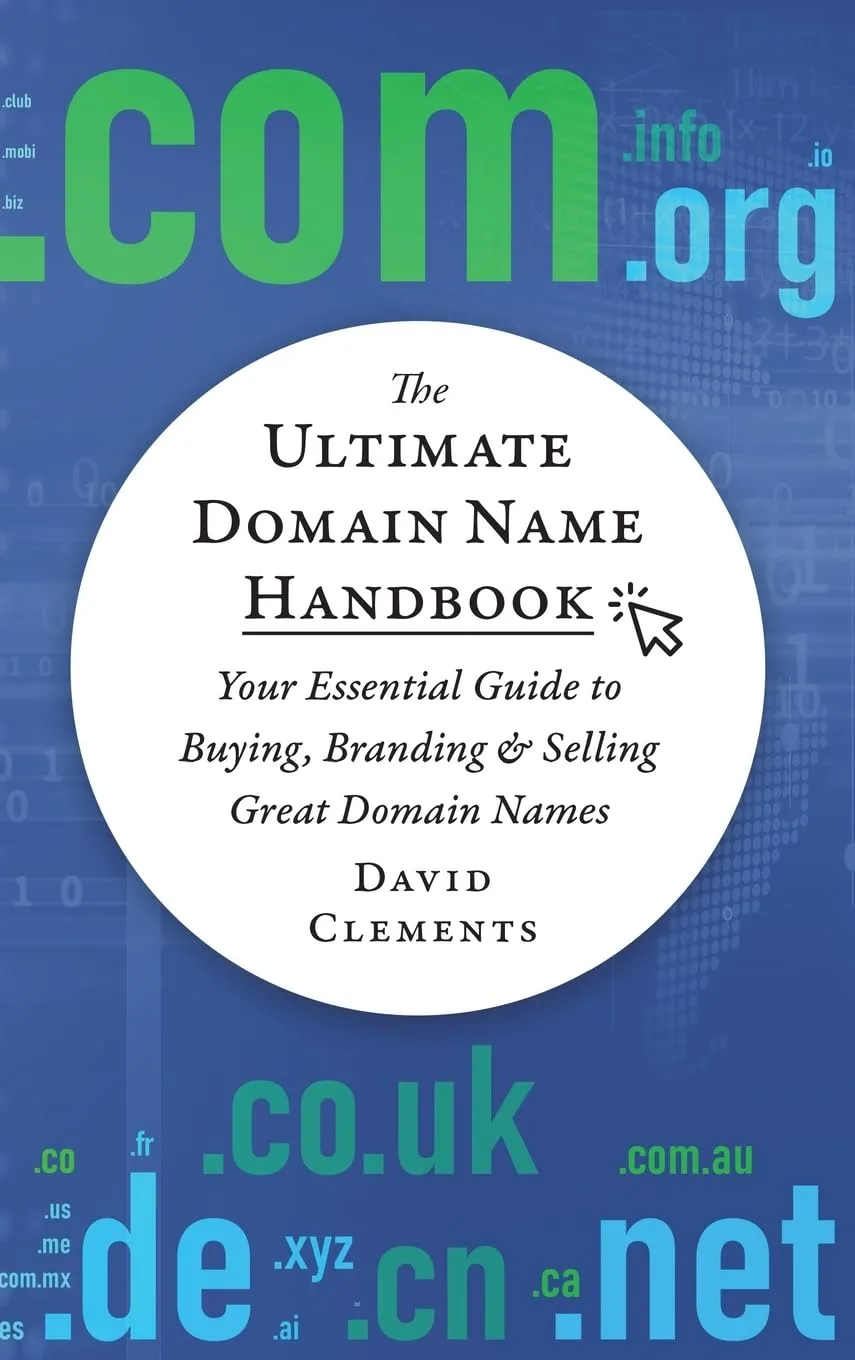
I’ve read my fair share of books on domain investing, and most feel like they’re written by folks who think they know more than they do—often doing more harm than good with half-baked advice. Then comes The Ultimate Domain Name Handbook by David Clements, a book that finally delivers what the domain world has been craving: a practical, no-nonsense guide from someone who’s actually out there making million-dollar deals. This isn’t just another domaining book—it’s like sitting down with a seasoned pro who’s ready to share the real secrets of digital real estate.
Standing Out in a Crowded Field
Most domain books fall into two traps: they’re either overly basic, skimming the surface with generic tips, or they’re written by outsiders who don’t truly get the game. Clements’ The Ultimate Domain Name Handbook: Your Essential Guide to Buying, Branding & Selling Great Domain Names is different. Spanning 268 pages and 23 chapters, it’s a deep dive into the art and science of domains, written by someone who lives it every day. Whether you’re new to domaining or a seasoned investor, this book bridges the gap between beginner basics and high-level strategy.
Why Clements Knows His Stuff
What makes this book stand out starts with the author. David Clements isn’t just theorizing—he’s the CEO of Brannans.com, a top-ten global domain brokerage firm according to Escrow.com. He’s closed seven-figure deals across 20+ languages, working with everyone from Fortune 500 companies to scrappy startups. But he’s not just a broker; he’s a doer. He bought Cheesecake.com for $100,000, built a business on it, and sold it to GourmetGiftBaskets.com in 2012. Now, he’s running Batteries.com, proving he knows how to turn domains into real businesses, not just investments.
Every chapter feels like it’s coming from someone who’s been in the trenches. When Clements talks about valuing domains or negotiating deals, it’s not abstract—it’s drawn from real transactions. That’s the kind of insight you can’t fake.

A Roadmap for Every Domainer
With 72,000 words across 23 chapters, the book is packed with actionable advice. It’s structured to guide you from the ground up, whether you’re just starting out or looking to level up. Early chapters cover the basics: what makes a domain valuable, how to spot potential, and how the industry works. These are great for newcomers but also a solid refresher for veterans.
The middle sections get into the nitty-gritty: branding, choosing extensions (.com vs. alternatives), and nailing down valuations. Clements’ experience shines here, as he explains how big companies actually think about domains—not through appraisal tools or guesswork, but through real-world negotiations. He breaks down what drives buyers’ decisions, which is gold for anyone looking to sell.
Later chapters tackle advanced topics most books skip: navigating intellectual property, securing deals safely, and maximizing value when selling premium domains. It’s like a masterclass in moving from amateur to pro.
Real Deals, Real Lessons
What sets this book apart is its use of real-world examples. Clements doesn’t rely on hypotheticals—he pulls from deals he’s brokered, like helping Intercontinental Exchange (parent of the NYSE) snag a key domain. He walks you through the process, the hurdles, and the payoff, showing exactly how a strategic domain can transform a brand. These case studies aren’t just success stories; they highlight mistakes to avoid, too.
His global perspective adds another layer. With deals in over 20 languages, Clements shows how domain strategies shift across markets and cultures, which is crucial as domaining goes worldwide.
Beyond Flipping Domains
Unlike many books obsessed with buying low and selling high, Clements takes a broader view. He sees domains as business assets—tools for branding, marketing, or even defensive plays. He dives into how startups, corporations, and investors value domains differently, offering frameworks to match. His take on extensions is particularly sharp: he makes a strong case for .com’s dominance (noting it still accounts for a third of global registrations) while explaining when other TLDs might work.
Domains and Startup Funding
One of the book’s standout sections is how domains tie into fundraising. Clements answers questions most entrepreneurs overlook: How does your domain affect investor perceptions? Can a great domain boost your valuation? Drawing from his work with venture-backed startups, he shows how a domain signals credibility and can make or break a funding round. For founders on a budget, he offers practical advice on when to splurge on a domain and when to hold off.
Navigating AI and the Future
Clements doesn’t shy away from the future, tackling how AI and changing search habits impact domains. He argues that memorable domains remain vital, even as voice search and AI assistants grow, because they still guide users to brands. His balanced take on blockchain domains avoids hype, focusing on what’s practical today while keeping an eye on what’s next. He even shares how he’s used AI tools to spot and flip domains, blending new tech with classic strategies.
Tackling Pain Points
The book directly addresses common domaining headaches. On extensions, Clements uses data to explain why .com still rules but doesn’t dismiss alternatives outright. He also tackles the tricky task of acquiring domains that aren’t for sale, offering step-by-step strategies for researching owners, reaching out, and negotiating. His focus on secure transactions—using trusted escrow services and proper transfer protocols—reflects hard-earned lessons from high-stakes deals.
A Smarter Approach to Investing
Clements’ investment advice steers clear of get-rich-quick nonsense. He focuses on premium .com domains—short, memorable, brandable names registered for 20+ years—and emphasizes disciplined research and realistic expectations. His tips on when to hold or sell help you make clear-headed decisions, and his case for working with pro brokers for big deals underscores the value of expertise.
Room for More
No book is perfect, and a few areas could use more depth. The focus on premium .coms is smart but might not resonate for those with smaller budgets, which covers many domainers. More detail on international markets—like local regulations or cultural quirks—would make it even more global. And while Clements clearly knows how to build businesses on domains, I’d love more guidance on deciding whether to develop or sell.
My Take
The Ultimate Domain Name Handbook delivers on its promise to be the go-to resource for anyone serious about domains. Whether you’re a startup founder picking your first domain, a marketer eyeing an upgrade, or an investor building a portfolio, Clements’ insights will sharpen your game. He blends the perspectives of a broker, entrepreneur, and strategist into a guide that’s both practical and forward-thinking.
For readers of my blog, this book is a must if you see domains as more than just web addresses. You can read it cover-to-cover for a full education or dip into chapters for specific advice, like prepping a sale or evaluating a buy. It’s not cheap wisdom—it’s the real deal from someone closing seven-figure deals.
In a field full of shallow guides and overhyped promises, Clements’ book stands out as a pro’s playbook. It’s not just about domains—it’s about mastering one of the digital world’s most powerful assets. Grab it if you’re ready to take your domaining seriously.